Category:
Web Design

Information gap
Operational visibility gap
Managers struggle to monitor real-time driver status and intervene quickly when issues occur.
Learning from current solutions
How existing tools approach fleet management. To understand how fleet operations are currently supported, I reviewed several driver and fleet management applications, focusing on how they handle tracking, compliance, and daily workflows.
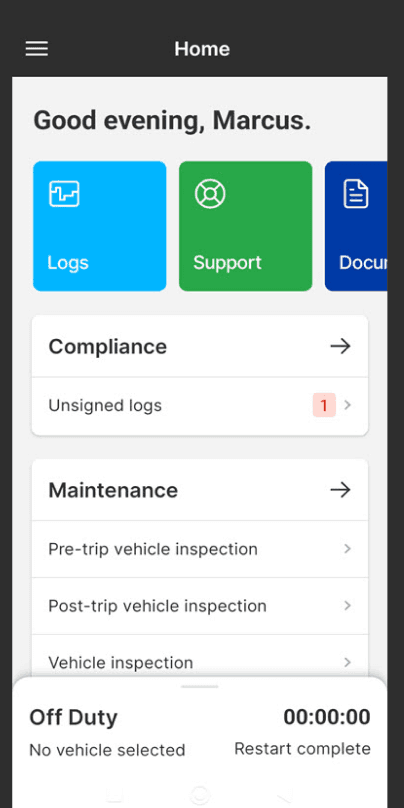


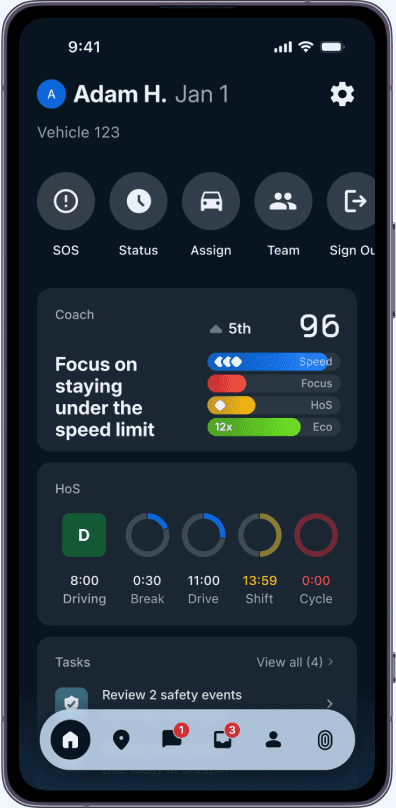

Existing solutions are fragmented —
some focus on compliance, others on tracking or operations,
but few provide a unified, driver-friendly experience.
Based on insights from existing fleet systems and operational workflows, I identified key areas where the experience could be simplified and improved.
The solution focuses on four core principles to support drivers in real-world conditions.
1. Driving & compliance clarity
2. Structured workflows & documentation
3. Trip visibility & task continuity
Keeping drivers aligned with
their journey
Connected system & communication
Not everything at once.
Drivers interact with the system in high-pressure, real-world conditions, where time and attention are limited.
Rather than exposing all features equally, the system surfaces only what drivers need at each moment — reducing unnecessary complexity and cognitive load.
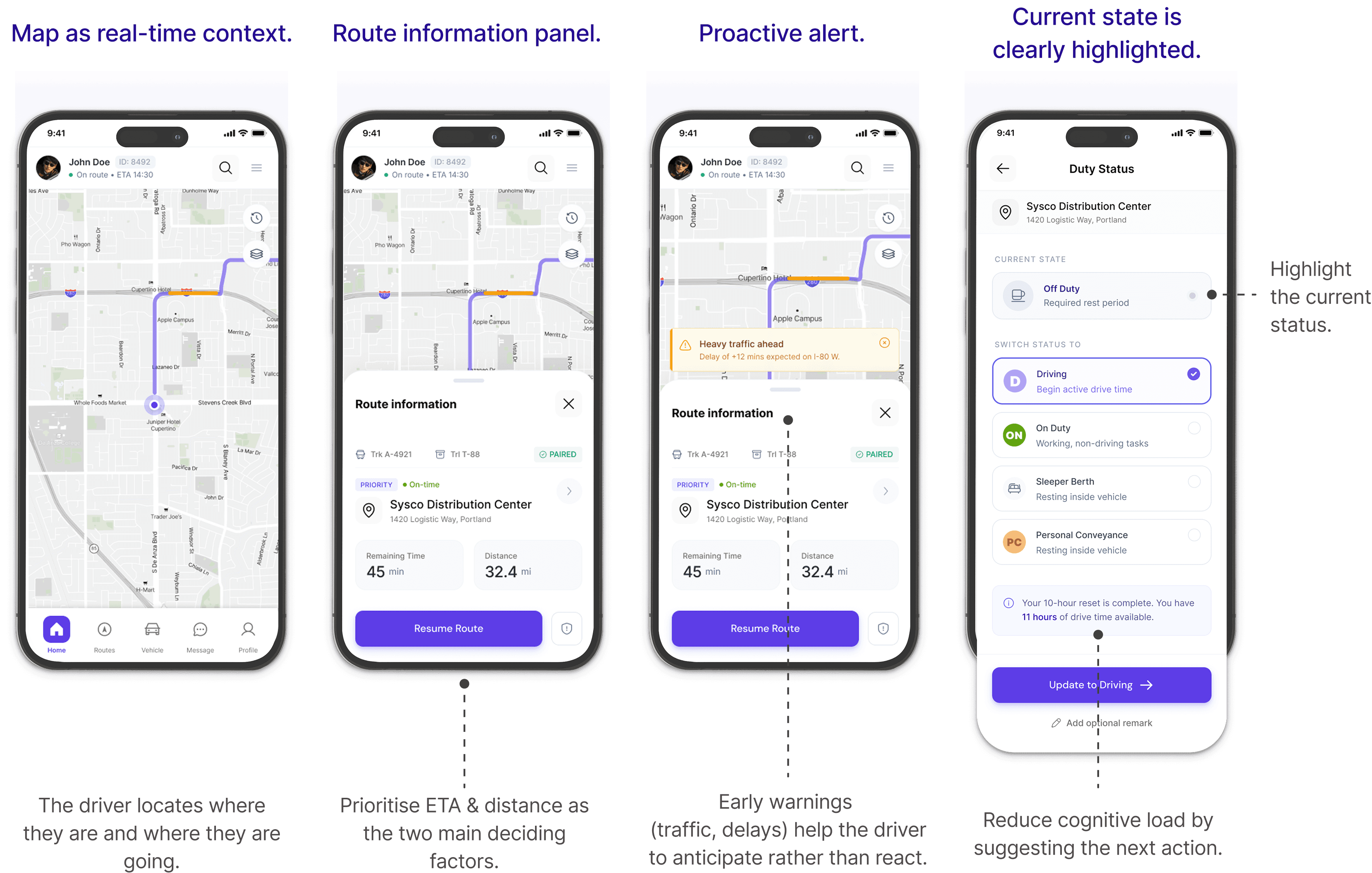
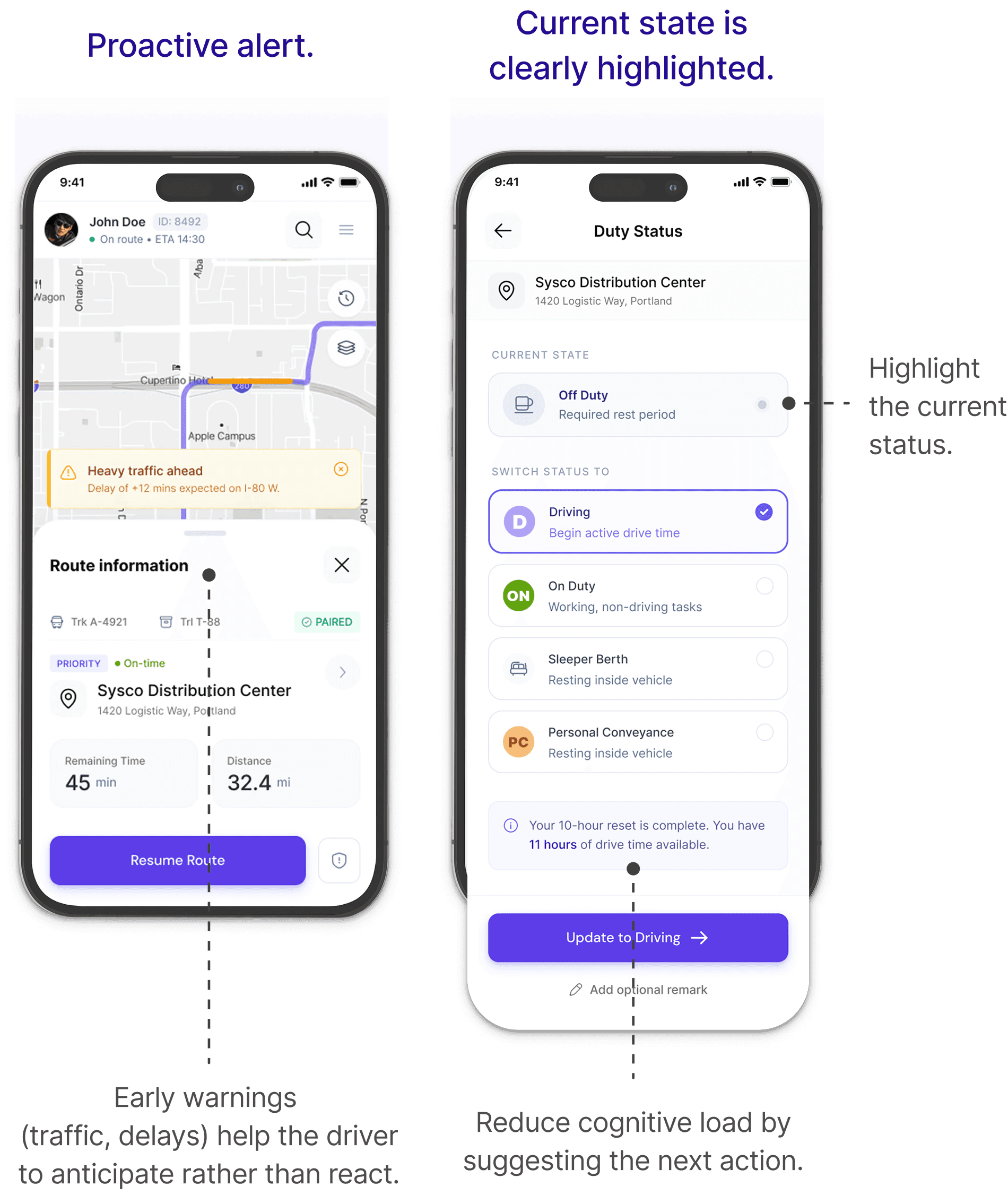
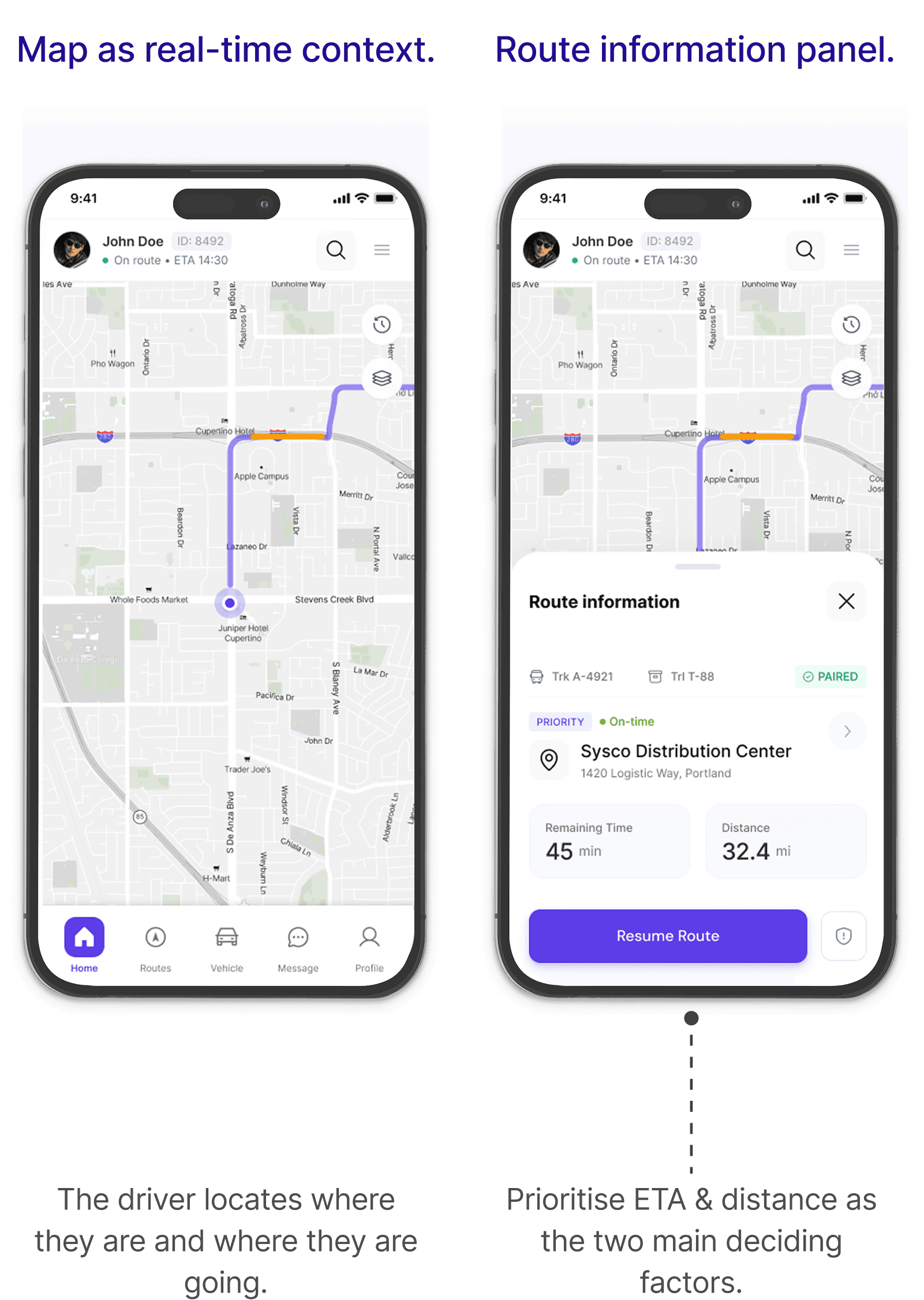
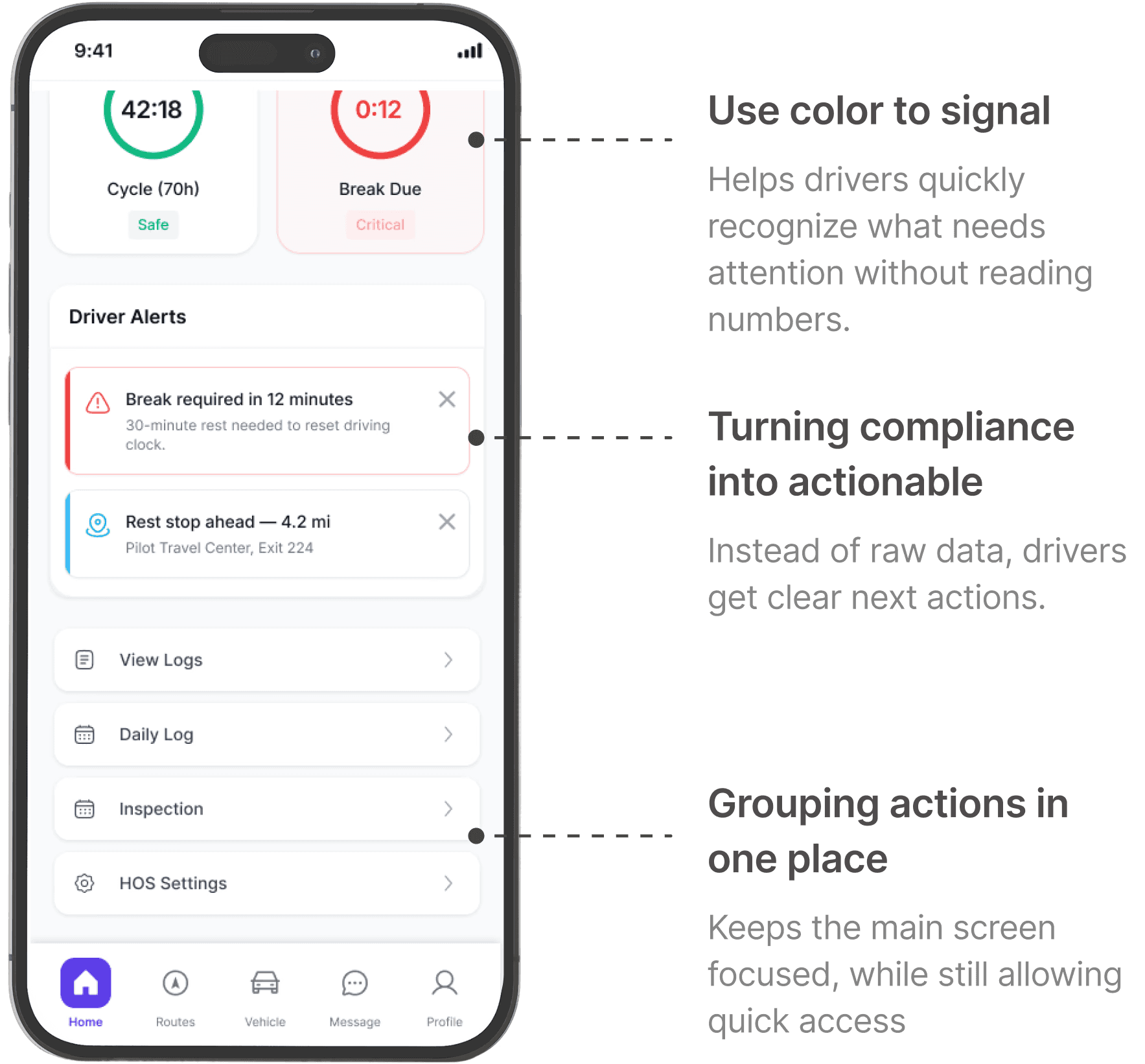
Drivers need to make quick decisions on the road. The system surfaces key context upfront — allowing them to understand and act immediately without navigating deeper.
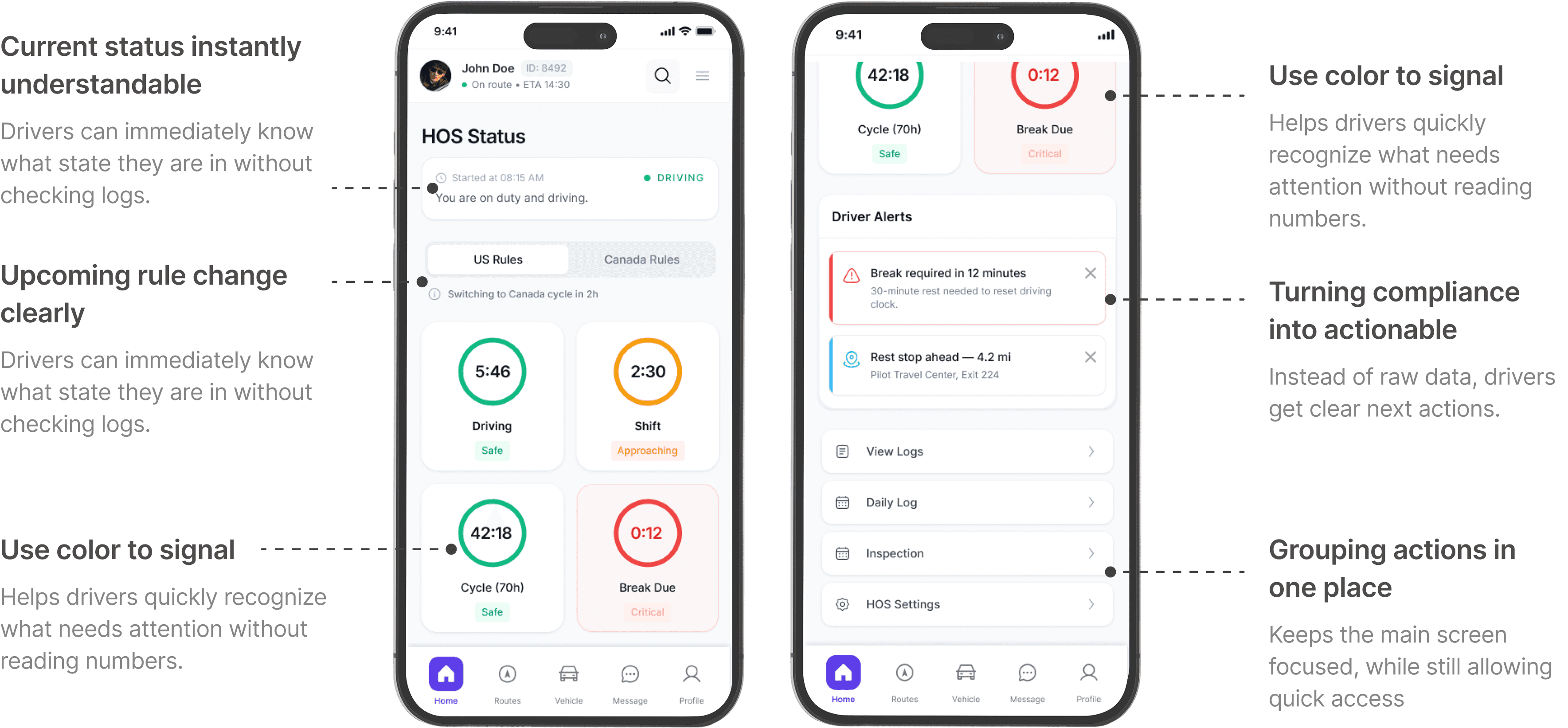
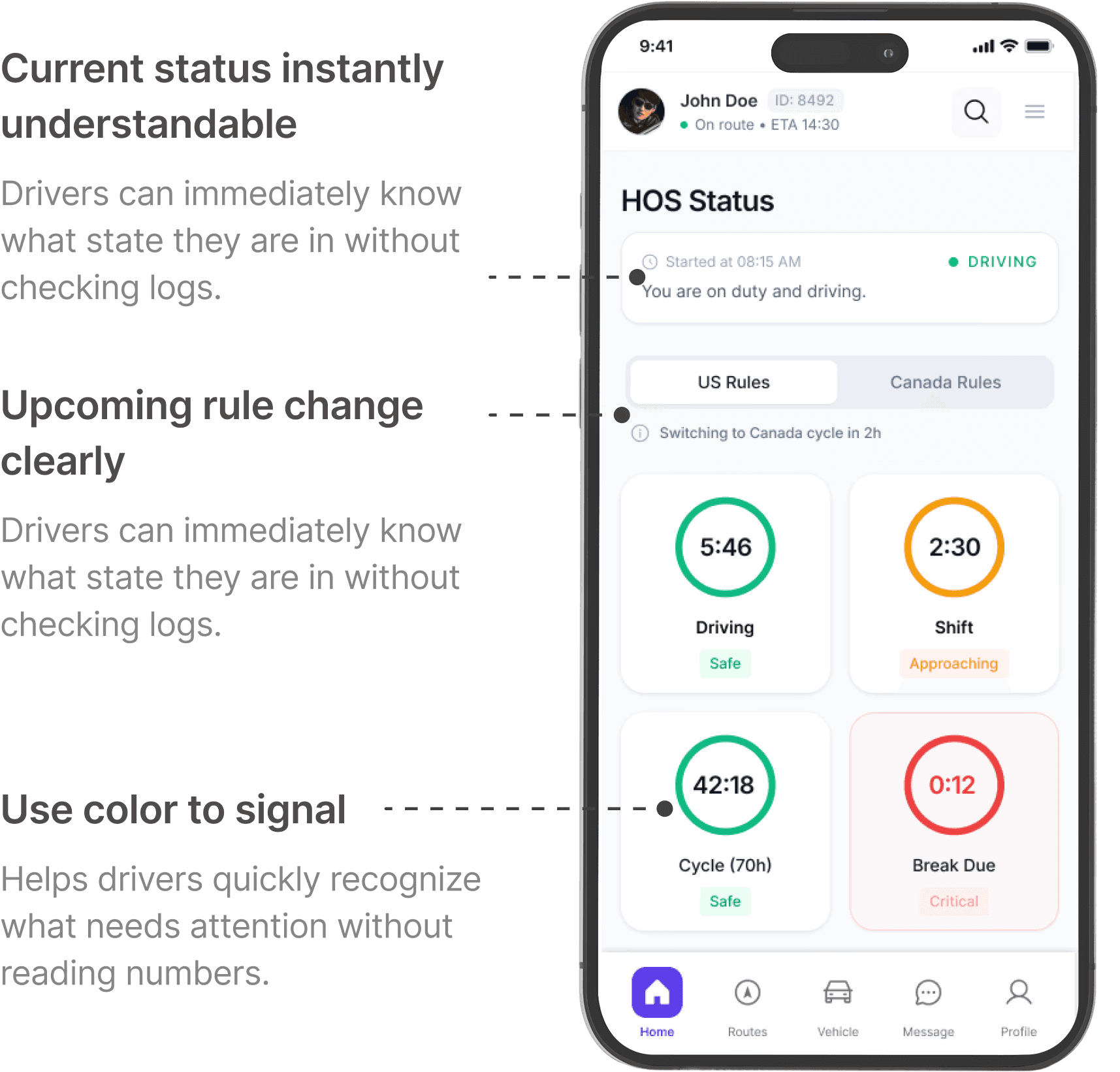
Key driving indicators (Driving, Shift, Cycle, Break) are presented using card-based layout with strong visual separation.
→ Helps drivers quickly scan and prioritize information without reading detailed logs.
Instead of browsing features, drivers enter workflows based on tasks such as starting a route, submitting documents, or completing inspections.
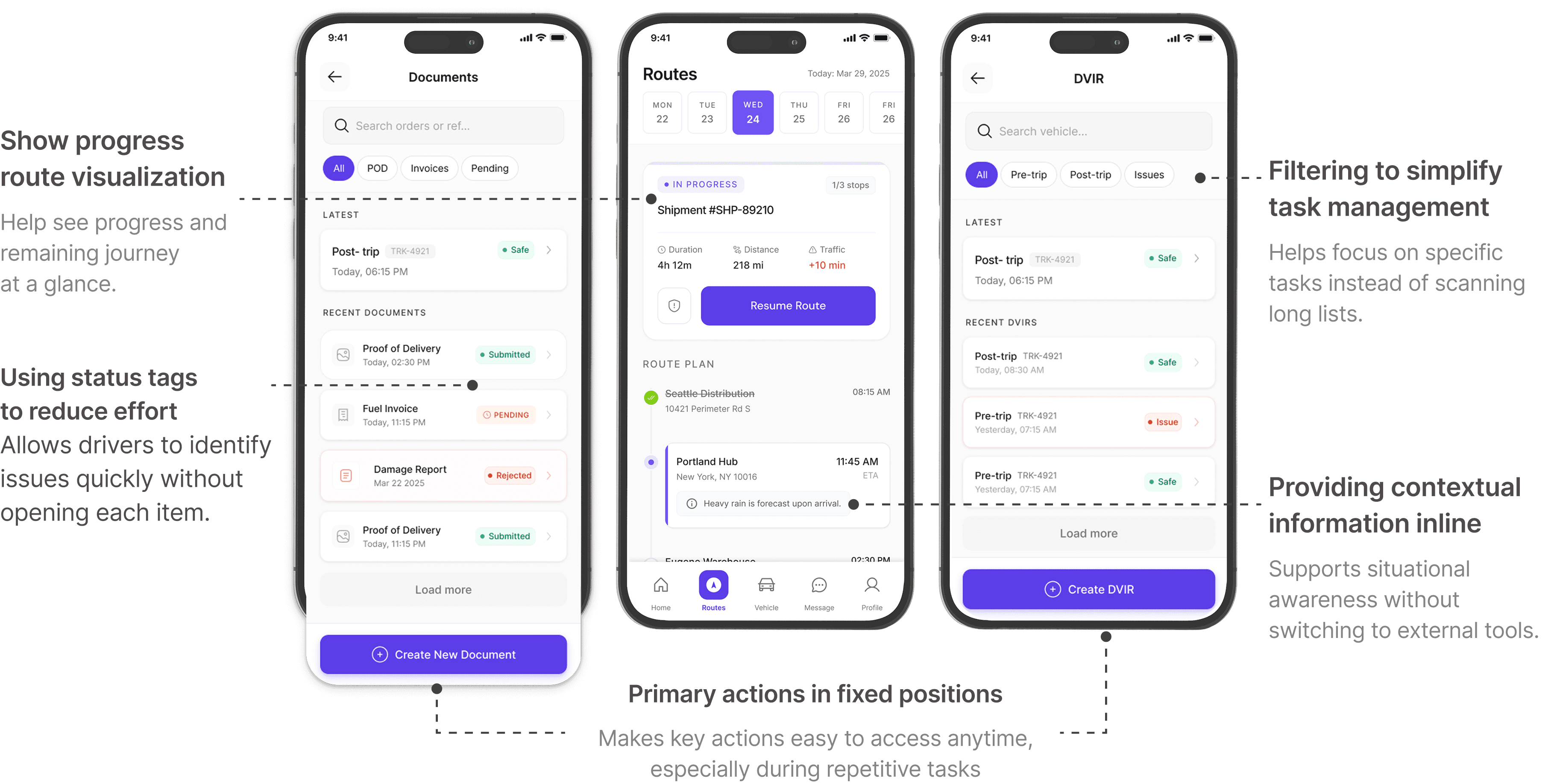
Structuring workflows around tasks
Drivers don’t need to “figure out where to go” — they follow clear workflows.
as a guided workflow that helps drivers complete vehicle inspections systematically — reducing errors, improving compliance, and aligning with real-world inspection behavior.
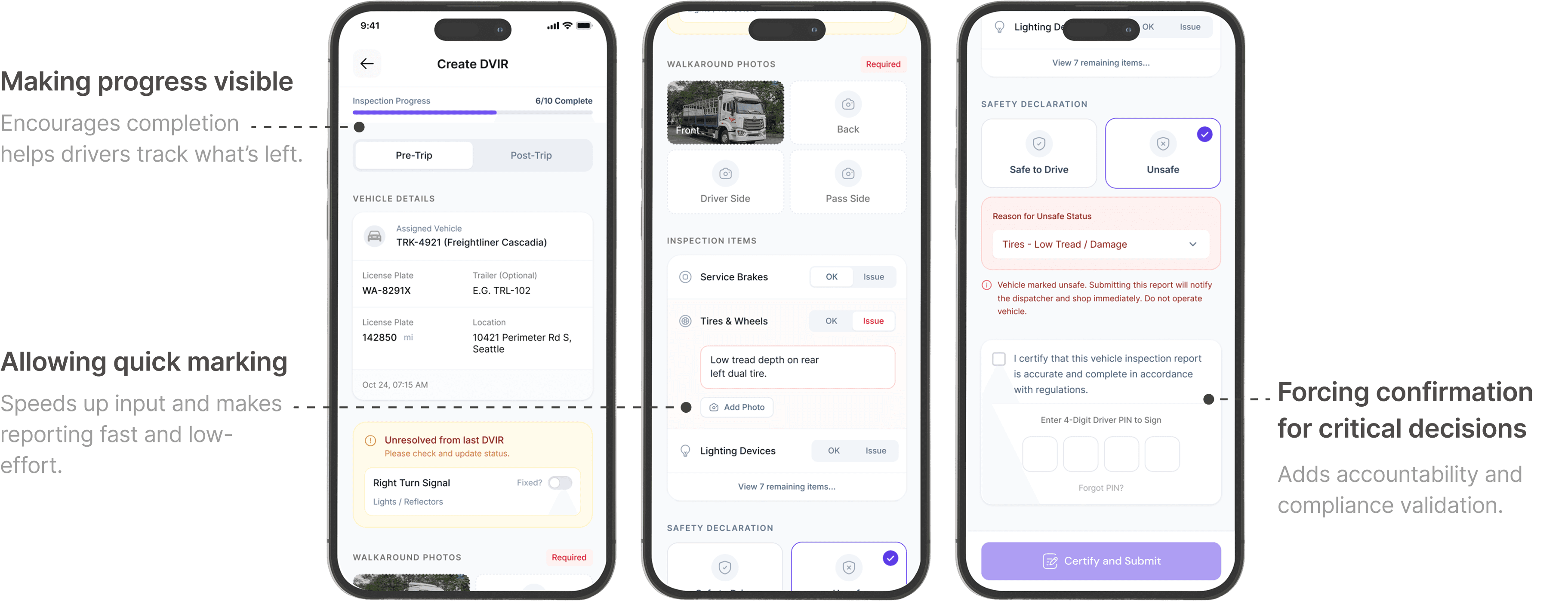
Inspection requires multiple steps, including authentication and reviewing detailed logs. Information is presented in a dense, document-like format
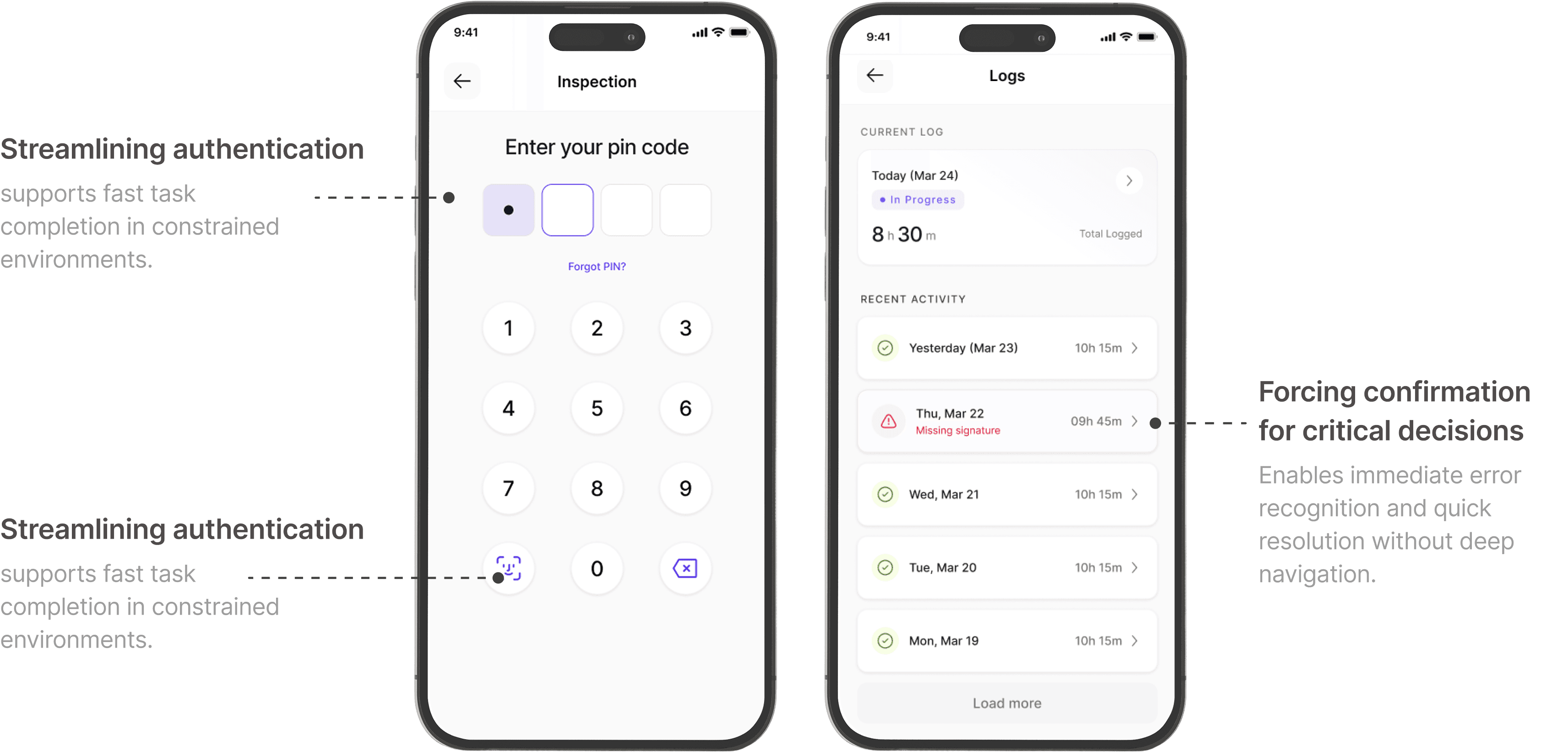
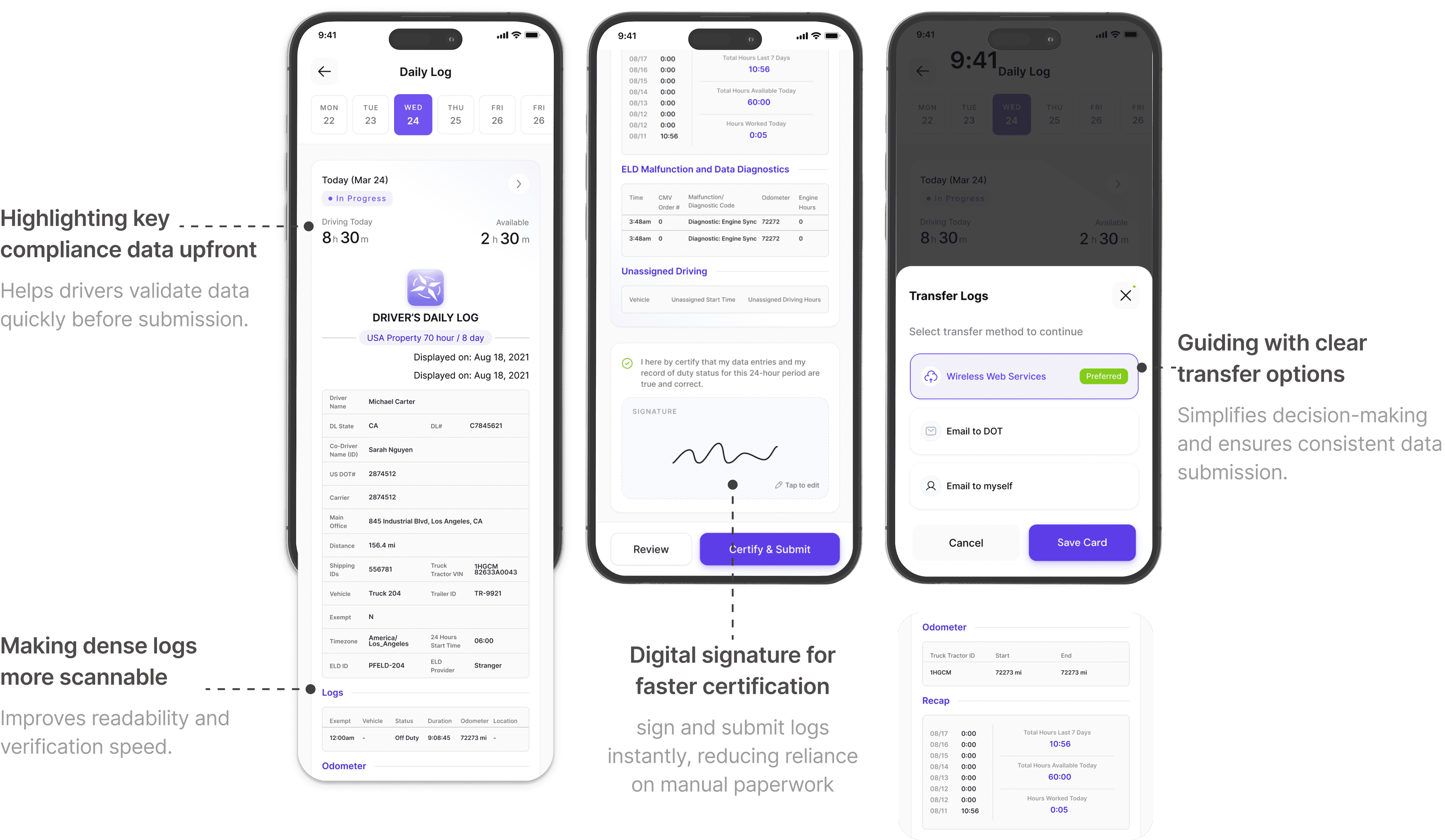
Submitting logs involves multiple steps — review, certification, and transfer.
Logs are often presented in dense, document-like formats, making them hard to scan and verify quickly.
Structuring workflows around tasks
Drivers don’t need to “figure out where to go” — they follow clear workflows.
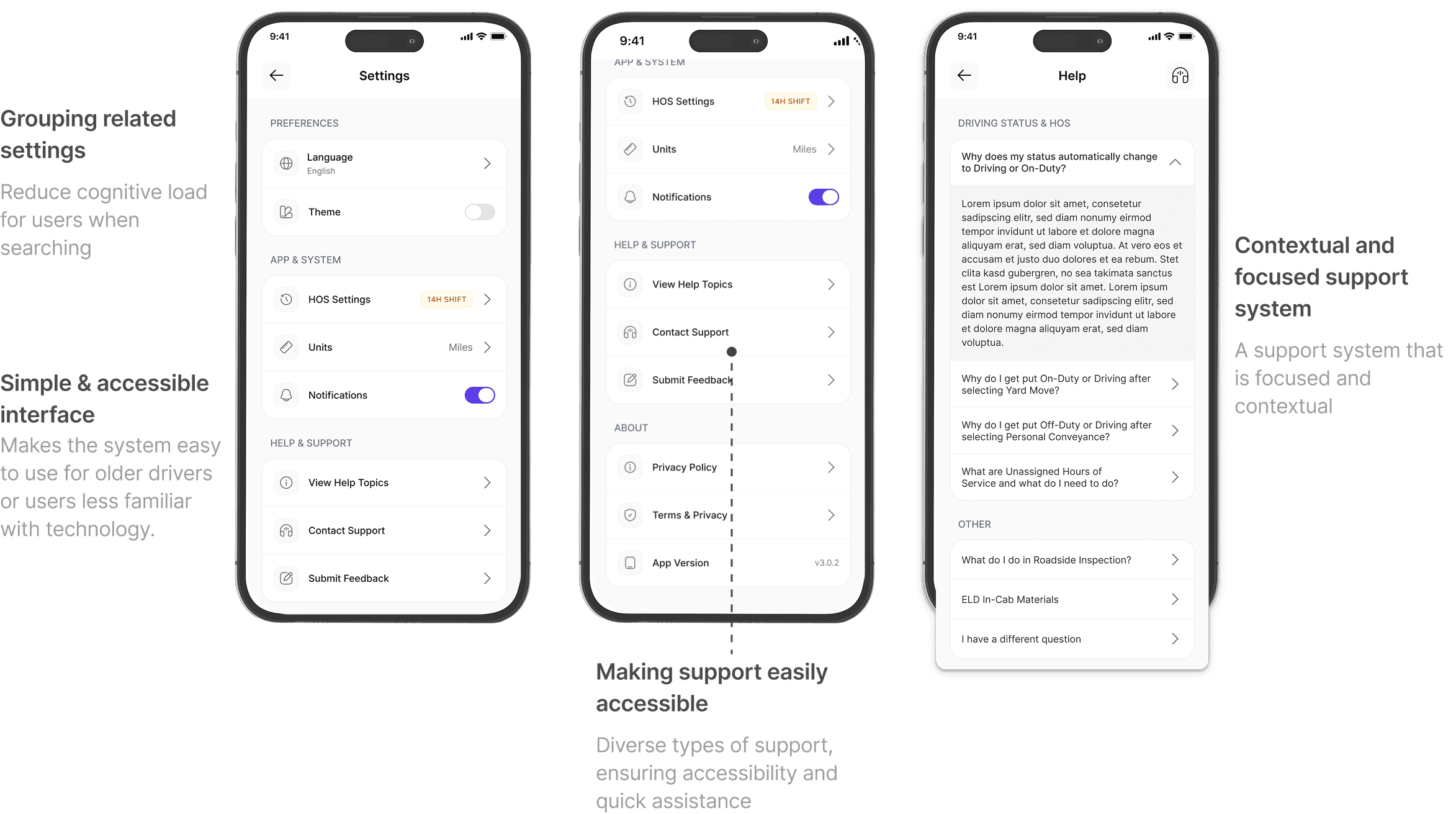
Organizing system settings and support into clear structures improves navigation and reduces confusion.